
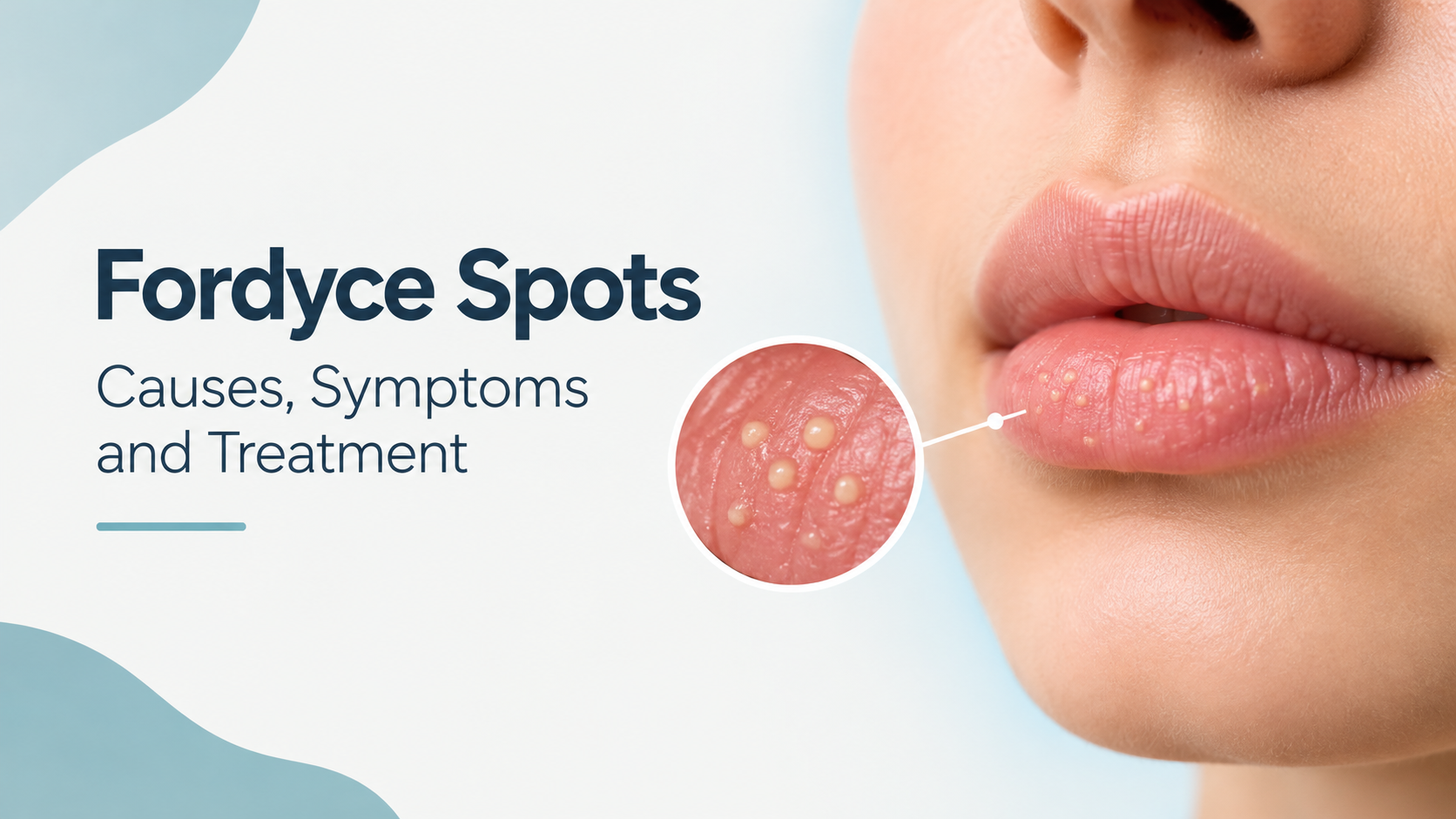
Fordyce spots are small, painless bumps that can appear on the lips, inside the cheeks, and around the genital area. Although their appearance can sometimes cause concern, these spots are generally harmless and are not a sign of a sexually transmitted infection (STI).
Understanding what causes Fordyce spots, how to recognize them, and when to seek medical advice can help you make informed decisions about your skin health. In most cases, treatment is unnecessary, but several medical options are available if their appearance bothers you.
What Are Fordyce Spots?
Fordyce spots are visible sebaceous glands, which are the small glands responsible for producing sebum, an oily substance that helps keep the skin moisturized. These glands can appear as tiny white, yellowish, or skin-colored bumps when they become noticeable near the surface of the skin.
They commonly develop on the edges of the lips, inside the cheeks, and on certain areas of the genital skin. Fordyce spots are a normal anatomical variation rather than a disease, and they do not usually cause physical discomfort.
What Do Fordyce Spots Look Like?
Fordyce spots typically appear as small, slightly raised bumps measuring approximately 1–3 millimeters. They may look white, pale yellow, pinkish, or similar to your natural skin tone, depending on the location and individual skin characteristics.
These spots often appear in groups rather than as isolated bumps. Stretching the affected skin may make them easier to see, particularly around the lips and genital area.
Unlike inflamed pimples, Fordyce spots usually do not contain pus or develop the redness associated with many skin infections. However, appearance alone cannot always establish the correct diagnosis because other skin conditions may look similar.
Where Do Fordyce Spots Commonly Appear?
Fordyce spots can develop in several areas of the body, particularly where sebaceous glands are visible without being associated with hair follicles.
Fordyce Spots on the Lips
Fordyce spots around the lips often appear as tiny pale or yellowish bumps along the lip border. They may become more noticeable when the lips are stretched, but they generally do not cause pain, itching, or swelling.
These spots are harmless and should not be confused with cold sores, which can cause tingling, discomfort, and clusters of fluid-filled blisters.
Fordyce Spots Inside the Mouth
Some people develop Fordyce spots on the inner cheeks or other areas of the oral lining. They may appear as small, pale bumps that become easier to notice when the mouth is opened or the cheek is stretched.
Because several oral conditions can produce similar changes, persistent or unusual lesions should be assessed by a dentist or healthcare professional when their cause is uncertain.
Fordyce Spots on Genital Skin
Fordyce spots can also appear on genital skin, including the penis, scrotum, and vulvar area. They may be particularly noticeable in groups and can sometimes cause unnecessary anxiety about sexual health.
However, Fordyce spots are not sexually transmitted and are not caused by sexual activity. If the bumps are new, painful, blister-like, ulcerated, or otherwise unusual, a healthcare professional can help determine whether they are Fordyce spots or another condition.
What Causes Fordyce Spots?
Fordyce spots develop when sebaceous glands become visible in areas where they are not directly associated with hair follicles. These glands produce sebum, which normally helps lubricate the skin.
The glands themselves are a normal part of human anatomy. Their visibility varies from person to person, and having Fordyce spots does not necessarily indicate an underlying medical problem.
Hormonal Changes During Puberty
Fordyce spots often become more noticeable during puberty, when hormonal changes influence the activity of sebaceous glands. As these glands develop and produce more oil, previously subtle spots may become easier to see.
Their appearance can vary throughout life, and some people notice them more clearly as they get older. This does not automatically mean that the condition is getting worse.
Genetics and Individual Skin Differences
Natural differences in skin structure can influence whether Fordyce spots are visible. Some people have numerous noticeable spots, while others have very few or none that they can easily see.
There is no reliable evidence that ordinary Fordyce spots result from poor personal hygiene. Regular washing is sensible for general skin health, but it does not eliminate the underlying sebaceous glands.
Are Fordyce Spots Normal?
Yes, Fordyce spots are generally considered a normal anatomical variation. They are benign, meaning they are not cancerous, and they are not contagious.
Their presence does not mean that someone has an STI, and they cannot be passed to another person through ordinary physical contact. They also do not usually require medication or medical procedures.
Nevertheless, it is important to distinguish Fordyce spots from other conditions. Genital warts, molluscum contagiosum, folliculitis, and certain inflammatory skin conditions can sometimes produce bumps that look similar but may require different management.
How Are Fordyce Spots Diagnosed?
A healthcare professional can often identify Fordyce spots by examining their appearance, location, size, and distribution. The small, pale bumps and lack of associated symptoms may help distinguish them from other skin conditions.
In most typical cases, additional testing is unnecessary. However, a clinician may recommend further examination if the lesions look unusual or the diagnosis remains uncertain.
You should consider seeking medical advice if the bumps develop suddenly, change significantly, become painful, bleed, or appear alongside other symptoms. A professional assessment is particularly helpful when genital bumps could have several possible causes.
Fordyce Spots Treatment Options
Most Fordyce spots do not require treatment because they are harmless and usually cause no physical symptoms. Treatment is generally considered when their appearance causes significant concern or when a dermatologist recommends a specific approach.
It is important to understand that removing Fordyce spots is usually a cosmetic decision rather than a medical necessity. Procedures can cause irritation, scarring, changes in pigmentation, or other complications.
Laser Treatment
Laser procedures may help reduce the visibility of Fordyce spots by targeting the affected tissue. A dermatologist can determine whether a particular laser treatment is suitable for the location and characteristics of the spots.
Results vary, and more than one session may be necessary. Potential risks include redness, skin irritation, pigmentation changes, and scarring.
Cryotherapy
Cryotherapy involves applying extreme cold to targeted tissue to destroy it. Although it is used for various skin conditions, its suitability for Fordyce spots depends on the individual case and the area being treated.
Cryotherapy can cause discomfort, blistering, and changes in skin pigmentation. It should only be considered after discussing the potential benefits and risks with a qualified healthcare professional.
Electrodessication
Electrodessication uses electrical energy to destroy or remove targeted tissue. A dermatologist may consider this procedure for selected cases where reducing the appearance of visible spots is desired.
The procedure may cause temporary irritation and carries a risk of scarring or pigment changes. Careful assessment is especially important when treating sensitive areas.
Prescription Creams
Certain topical treatments may be considered in selected cases, but no cream should be assumed to eliminate Fordyce spots permanently. The appropriate option depends on the location, skin sensitivity, and whether treatment is necessary at all.
Avoid applying prescription acne medication, strong acids, or other irritating products to the lips or genital skin without medical guidance. Products designed for other skin conditions may cause irritation without providing meaningful improvement.
Can You Remove Fordyce Spots at Home?
There is no well-established home remedy that reliably removes Fordyce spots. Because they are associated with normal sebaceous glands, ordinary cleansing products and home treatments generally cannot eliminate their underlying cause.
The safest approach is to leave the spots alone unless a healthcare professional recommends treatment. Squeezing, scraping, or attempting to burn them off can injure the skin and increase the risk of infection and scarring.
You should also be cautious about online remedies that promise permanent results. Lemon juice, harsh exfoliants, and concentrated acids can irritate sensitive skin, especially around the lips and genital area.
If the spots are bothering you, a dermatologist can explain which options may help and whether the potential benefits outweigh the risks.
Fordyce Spots vs. Other Skin Conditions
Fordyce spots can resemble other small bumps, making it important to consider their appearance and associated symptoms rather than relying on size or color alone.
| Condition | Typical Appearance | Important Difference |
|---|---|---|
| Fordyce spots | Small, pale or yellowish bumps | Usually painless and harmless |
| Pimples | Red, inflamed bumps that may contain pus | Often associated with blocked or inflamed follicles |
| Cold sores | Clusters of fluid-filled blisters | May cause tingling, burning, or pain |
| Genital warts | Bumps that may be flat, raised, or irregular | Can be caused by certain types of human papillomavirus (HPV) |
| Molluscum contagiosum | Firm, rounded bumps that may have a central indentation | Caused by a contagious viral skin infection |
These descriptions are general guidelines, not a substitute for a medical diagnosis. If you are unsure what a bump is, especially in the genital area, professional evaluation is the safest way to identify its cause.
Can Fordyce Spots Be Prevented?
There is no proven method to prevent Fordyce spots because they are related to normal anatomical differences rather than a preventable infection. Their visibility can vary naturally, and some people develop more noticeable spots than others.
Maintaining ordinary skin hygiene is beneficial, but excessive washing or aggressive exfoliation will not prevent these glands from becoming visible. In fact, harsh products can damage the skin and make irritation more noticeable.
Rather than trying to prevent every spot, focus on avoiding unnecessary skin irritation and seeking professional advice if the appearance changes or the diagnosis is unclear.
When Should You See a Doctor?
Fordyce spots are usually harmless, but not every bump that resembles them has the same cause. A medical assessment can provide reassurance and help identify conditions that may require treatment.
Arrange an appointment with a healthcare professional if you notice persistent uncertainty about the diagnosis, significant changes in the bumps, pain, bleeding, sores, or unusual discharge. You should also seek advice if genital bumps appear after a potential sexual exposure or are accompanied by other symptoms.
Do not attempt to remove the bumps yourself before confirming what they are. Accurate identification is the first step toward choosing appropriate care.
Frequently Asked Questions About Fordyce Spots
Are Fordyce Spots an STI?
No. Fordyce spots are visible sebaceous glands and are not sexually transmitted infections. They cannot be passed to another person through sexual contact or ordinary physical contact, although other conditions that resemble them may be contagious.
Are Fordyce Spots Permanent?
Fordyce spots may remain visible for many years, and their appearance can change over time. They do not always disappear on their own, and cosmetic procedures may reduce their visibility in selected cases.
Do Fordyce Spots Mean Poor Hygiene?
No. Fordyce spots are not a sign of poor hygiene or an unclean body. Washing the affected area normally is sufficient for general cleanliness, and excessive scrubbing will not remove the glands.
Can Fordyce Spots Become Cancerous?
Fordyce spots are benign and are not considered precancerous lesions. However, a bump that changes significantly or does not resemble typical Fordyce spots should be examined rather than automatically assumed to be harmless.
Should I Squeeze Fordyce Spots?
No. Squeezing or picking at Fordyce spots can damage the skin, cause inflammation, and increase the risk of infection or scarring. Leaving them alone is generally the safest option.
Do Fordyce Spots Need Treatment?
Most Fordyce spots do not need treatment because they are harmless and usually cause no symptoms. If their appearance causes concern, a dermatologist can discuss appropriate cosmetic options and explain their possible side effects.
Final Thoughts
Fordyce spots are common, harmless, visible sebaceous glands that can appear around the lips, inside the cheeks, and on genital skin. Although their appearance may cause concern, they are not an STI, are not contagious, and generally do not require medical treatment.
The most important step is distinguishing Fordyce spots from other conditions that may look similar. If you are uncertain about the bumps, notice unusual changes, or want to explore cosmetic treatment, consult a qualified healthcare professional before trying home remedies or removal procedures.
