
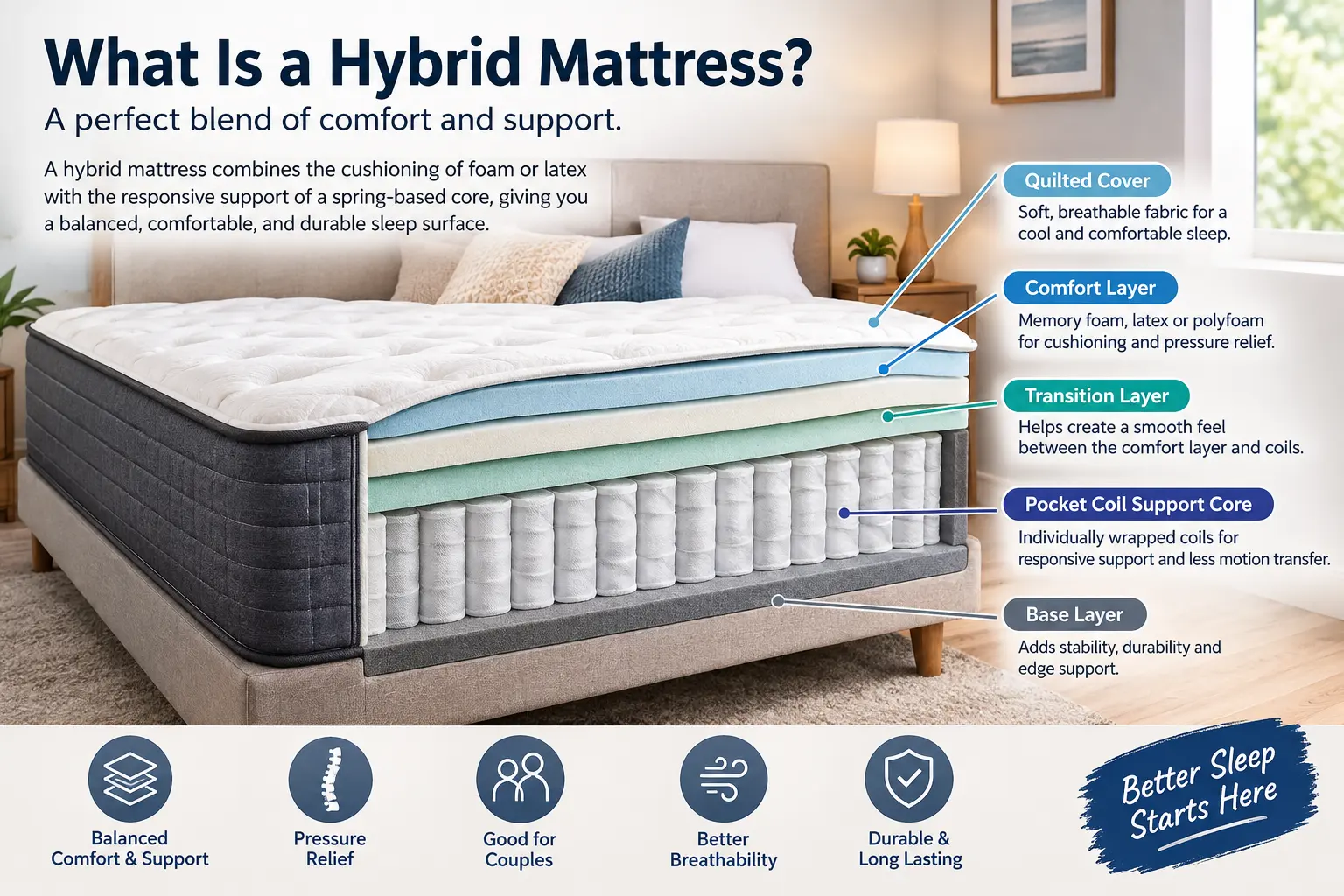
Choosing the right mattress can make a noticeable difference in how comfortably you sleep and how refreshed you feel in the morning. However, with so many mattress types available, comparing materials, firmness levels, and support systems can quickly become confusing. A hybrid mattress offers an interesting solution by combining the cushioning of foam or latex with the responsive support of a spring-based core.
What is a hybrid mattress, and why do so many sleepers consider this design? The answer lies in its layered construction. Rather than relying entirely on foam or traditional metal springs, a hybrid mattress brings different materials together to balance pressure relief, stability, responsiveness, and comfort. Understanding these features can help you decide whether this mattress style suits your sleeping position, comfort preferences, and budget.
In this guide, we will explore hybrid mattress construction, its benefits and disadvantages, comparisons with other mattress types, and practical tips for choosing the right option.
What Is a Hybrid Mattress?
A hybrid mattress is a type of bed that combines a spring-based support system with comfort layers made from materials such as memory foam, polyfoam, or latex. Most modern designs use pocketed coils, although construction varies between manufacturers and individual models.
The idea behind a hybrid mattress is straightforward: springs provide a supportive foundation, while the upper layers cushion the body. This combination can create a sleeping surface that feels more responsive than an all-foam mattress while offering more contouring than a traditional innerspring design.
For example, a memory foam hybrid mattress may gently adapt to the body’s shape, while its coil system helps maintain support beneath the sleeper. A latex hybrid mattress may feel more buoyant and responsive because latex generally springs back more quickly than traditional memory foam.
The overall experience depends on the materials, layer thickness, coil design, and firmness level. Consequently, not every hybrid mattress feels the same.
What Is a Hybrid Mattress Made Of?
Understanding hybrid mattress materials makes it easier to compare different models. Although manufacturers use various combinations, most designs contain several essential layers.
1. Comfort Layer
The comfort layer sits at the top of the mattress and influences the initial feel. It may contain memory foam, latex, soft polyfoam, or other cushioning materials.
Memory foam typically contours around the body, which some sleepers appreciate when resting on their sides. Latex usually feels more springy, allowing sleepers to change positions without feeling as deeply cradled. Polyfoam offers another option, with comfort characteristics that depend on its formulation and density.
2. Transition Layer
Some hybrid mattresses include a transition layer between the comfort materials and the coil system. This layer helps create a gradual change from the softer surface to the firmer support underneath.
Its purpose is to improve the overall feel and help distribute body weight across the mattress. Not every model uses a separate transition layer, so the construction should be checked before purchasing.
3. Pocketed Coil Support Core
The support core is one of the defining features of many hybrid mattresses. It contains metal springs, often individually wrapped in fabric pockets.
Because pocketed coils can move more independently than interconnected spring systems, they may respond more precisely to pressure from different parts of the body. This design can also reduce the amount of movement transferred across the bed, although the result depends on the coil arrangement and comfort layers.
4. Base and Edge Support
A lower foundation layer may provide stability and help the mattress maintain its structure. Many models also reinforce their perimeter with stronger coils or denser foam.
These features can make it easier to sit on the edge of the bed or use more of the available sleeping surface. However, edge support differs between products.
How Does a Hybrid Mattress Work?
A hybrid mattress works by combining the functions of its different layers rather than asking one material to provide every comfort feature.
When someone lies down, the upper cushioning layers compress to accommodate the body’s contours. Beneath them, the spring system responds to the applied weight and provides structural support. The interaction between these layers influences how soft, stable, or responsive the mattress feels.
For instance, a side sleeper may appreciate cushioning around the shoulders and hips, while a back sleeper may prefer a surface that feels supportive without excessive sinking. A couple may prioritize motion isolation so that one person’s movements disturb the other less.
This combination of cushioning and support is the main reason hybrid mattresses appeal to people with different sleep preferences. Nevertheless, the right balance depends on body weight, sleeping position, personal comfort, and mattress design.
What Are the Benefits of a Hybrid Mattress?
Hybrid mattresses offer several potential advantages, although the benefits vary by model.
Balanced Comfort and Support
One of the most appealing hybrid mattress benefits is the combination of cushioning and spring-based support. The upper layers can soften contact with the sleeping surface, while the coil system provides a responsive foundation.
This balance may suit sleepers who find traditional innerspring mattresses too firm or some all-foam designs too enveloping.
Pressure Relief
Comfort layers can help distribute pressure around areas such as the shoulders, hips, and knees. This feature may be especially useful for side sleepers, who often place more weight on their shoulders and hips.
However, pressure relief depends on the mattress firmness, material quality, and individual body shape. A mattress that feels comfortable to one person may feel uncomfortable to another.
Motion Isolation
Pocketed coils and cushioning foam can help limit the transfer of movement across the bed. This may benefit couples who share a mattress but follow different sleeping schedules.
Memory foam hybrids often emphasize contouring and motion absorption, while some spring-focused designs feel more responsive. No mattress eliminates every movement, so couples should consider their sensitivity to disturbances.
Airflow and Temperature Regulation
Hybrid mattresses may allow more airflow through their coil cores than dense, all-foam designs. This construction can help reduce heat buildup, particularly when paired with breathable comfort materials and an appropriate mattress cover.
Still, a hybrid mattress is not automatically cool. Thick memory foam, dense upholstery, room temperature, and individual sleeping habits can all influence how warm the surface feels.
Responsive Feel
The spring system often makes a hybrid mattress easier to move around on than a deeply contouring foam mattress. This responsiveness can appeal to combination sleepers who switch between their sides, backs, and stomachs throughout the night.
Potentially Useful Edge Support
Many hybrid designs offer reinforced perimeter support. Stronger edges can provide a more stable place to sit and may help sleepers use the full width of the mattress.
The actual result depends on the edge construction and the quality of the materials.
What Are the Disadvantages of a Hybrid Mattress?
Despite their versatility, hybrid mattresses are not ideal for everyone.
Higher purchase price: Hybrid construction combines several materials and a spring system, which can make some models more expensive than basic foam or innerspring mattresses. Affordable options exist, but prices vary considerably.
Greater weight: Coils, foam layers, and reinforced edges can make these mattresses difficult to move, rotate, or carry upstairs. Delivery and setup arrangements may therefore matter.
Variable temperature performance: Although the coil core may encourage airflow, thick or heat-retaining comfort layers can still make certain models feel warm.
Possible noise: Modern pocketed coils are often relatively quiet, but springs and other components may develop noise as a mattress ages or its construction wears.
Different firmness experiences: A mattress described as medium-firm may feel different depending on body weight and sleeping position. Choosing the wrong firmness can reduce comfort even when the materials are high quality.
Limited suitability for some preferences: People who prefer the deep, uniform contouring of all-foam mattresses may not enjoy the more buoyant feel of a hybrid. Others may simply prefer a traditional spring mattress.
Hybrid Mattress vs Memory Foam
The difference between a hybrid mattress and memory foam mattress mainly concerns construction and feel.
A traditional memory foam mattress relies primarily on foam layers for cushioning and support. A hybrid mattress combines foam or latex comfort materials with a spring-based core.
Memory foam can provide a close, hugging sensation and absorb movement effectively. However, some models allow sleepers to sink more deeply into the surface, which may make changing positions feel slower.
Hybrid mattresses often provide more bounce and a different balance of contouring and support. Their temperature performance depends on the materials used, rather than the mattress category alone.
Choose memory foam if you prefer a more enveloping feel and substantial movement absorption. Consider a hybrid if you want cushioning alongside a more responsive spring foundation.
Hybrid Mattress vs Innerspring
A traditional innerspring mattress generally relies more heavily on its spring system, with relatively thin cushioning layers. A hybrid adds substantial comfort materials, such as memory foam or latex, above the coils.
This difference can affect pressure relief, motion isolation, and the initial sensation when lying down.
An innerspring mattress may appeal to people who prefer a more traditional, springy surface. A hybrid can provide additional cushioning without removing the responsive feel associated with springs.
However, the categories sometimes overlap, and manufacturers do not always describe construction in identical ways. Reviewing the actual materials and layer specifications is more useful than relying on the product name alone.
Hybrid Mattress vs Latex Mattress
A latex mattress may contain natural latex, synthetic latex, or a combination of both. Some latex mattresses use latex throughout their comfort and support layers, while a latex hybrid combines latex cushioning with metal coils.
Latex often feels buoyant and responsive, making it easier to move across the surface. Memory foam generally provides a more contouring sensation, although individual formulations differ.
A latex hybrid may suit someone who wants a spring-based foundation with responsive cushioning. An all-latex mattress may appeal to someone who prefers a more consistent latex feel.
Price, material sourcing, durability, and firmness should all be considered when comparing these options.
Is a Hybrid Mattress Good for Different Sleeping Positions?
A hybrid mattress can work well for different sleeping positions, but the best choice depends on firmness, body weight, and the way the comfort layers respond.
Hybrid Mattress for Side Sleepers
Side sleepers often benefit from enough cushioning to accommodate the shoulders and hips. A softer or medium-feeling hybrid may provide a comfortable starting point, although people with different body weights can experience the same mattress differently.
Look for a design that cushions these pressure points without allowing the body to sink excessively.
Hybrid Mattress for Back Sleepers
Back sleepers often prefer a balanced surface that supports the body’s natural alignment while providing comfortable cushioning. A medium-firm model may be worth considering, but there is no universal firmness level for every sleeper.
Pay attention to how the lower back and hips feel when lying in your usual position.
Hybrid Mattress for Stomach Sleepers
Stomach sleepers may prefer a firmer surface that limits excessive sinking around the midsection. A mattress that feels too soft can be uncomfortable for some people in this position.
Compare firmness options carefully and consider whether the mattress maintains a stable, even sleeping surface.
Hybrid Mattress for Couples
Couples may appreciate pocketed coils, motion-isolating comfort layers, and a supportive perimeter. These features can improve the shared sleeping experience, particularly when partners have different movement patterns.
Before buying, consider both sleepers’ comfort preferences rather than choosing a mattress based on one person’s needs alone.
Are Hybrid Mattresses Good for Hot Sleepers?
Hybrid mattresses can be a reasonable option for people who tend to sleep warm, especially when their construction supports airflow and avoids excessive heat retention.
The coil core may allow air to circulate through the mattress more readily than a solid block of foam. Nevertheless, the comfort layers still matter. Dense memory foam and thick covers can influence how much heat remains near the sleeping surface.
If temperature regulation is important, examine the manufacturer’s material specifications, consider breathable bedding, and look for clear information about cooling features. Terms such as cooling foam or temperature regulating should not be treated as guarantees of a cool night’s sleep.
Room ventilation, humidity, pajamas, and bedding can also affect sleep temperature.
How Long Does a Hybrid Mattress Last?
A hybrid mattress lifespan depends on its construction, material quality, frequency of use, and care. There is no single lifespan that applies to every model.
Over time, comfort layers may soften, foam may develop impressions, and springs or edge supports may lose some of their original performance. Heavy or uneven loading and inadequate support can contribute to premature wear.
To help maintain your mattress:
- Use a compatible bed frame with appropriate center support.
- Follow the manufacturer’s instructions for rotation and care.
- Avoid jumping on the mattress or placing excessive weight on one area.
- Use a suitable mattress protector to reduce stains and moisture.
- Check the warranty terms and care requirements before purchase.
Replace a mattress when it no longer provides comfortable, consistent support or develops significant damage. A warranty period is not necessarily the same as the mattress’s expected useful life.
Does a Hybrid Mattress Need a Box Spring?
Not every hybrid mattress requires a box spring. Many can be used on a compatible platform bed, slatted frame, or foundation designed to support the mattress.
The most important factors are the manufacturer’s requirements, the distance between slats, the frame’s weight capacity, and whether the foundation provides adequate support.
Some mattresses may be compatible with a traditional box spring, while others require a firmer, flatter base. Using an unsuitable foundation could affect mattress performance and may influence warranty coverage.
Always check the specific model’s setup instructions before placing it on an existing bed frame.
How to Choose the Right Hybrid Mattress
Finding the right hybrid mattress involves more than comparing prices or selecting the most popular brand. Consider the following factors before making a decision.
1. Choose your preferred firmness. Think about whether you prefer a plush, medium, or firm sleeping surface. If possible, test the mattress or review a clear trial policy.
2. Match the mattress to your sleeping position. Side sleepers may need more cushioning, while some stomach sleepers prefer a firmer surface. Back and combination sleepers should consider both support and ease of movement.
3. Examine the materials. Check whether the mattress uses memory foam, latex, polyfoam, pocketed coils, or other components. Material descriptions provide more useful information than broad marketing claims.
4. Consider temperature regulation. If you sleep hot, investigate the comfort layers, cover fabric, and available information about airflow.
5. Compare motion isolation and edge support. These features may be especially important for couples or people who sit on the edge of their beds frequently.
6. Review the price and warranty. Compare the total cost, delivery charges, return conditions, trial period, and warranty exclusions. A lower initial price is not always the best value.
7. Check the bed frame requirements. Make sure your current foundation is compatible before purchasing a new mattress.
A thoughtful comparison helps you identify a mattress that fits your actual needs rather than paying for features you may not use.
Is a Hybrid Mattress Worth It?
A hybrid mattress can be worth the investment if you want a combination of cushioning, spring-based support, and a responsive sleeping surface. It may be particularly appealing to people who find traditional innerspring mattresses too basic but prefer more bounce than some foam mattresses provide.
However, value depends on the individual product. An expensive mattress is not automatically more comfortable, and a hybrid design is not necessarily superior to every all-foam, latex, or innerspring alternative.
Before purchasing, compare the construction, firmness, return policy, warranty, and total cost. Whenever possible, use a trial period to determine whether the mattress remains comfortable after several nights of normal use.
Frequently Asked Questions
What does hybrid mattress mean?
A hybrid mattress combines a spring-based support core with comfort layers made from materials such as memory foam, polyfoam, or latex.
Is a hybrid mattress soft or firm?
It can be soft, medium, medium-firm, or firm. The overall feel depends on the comfort layers, spring system, and design.
Are hybrid mattresses comfortable for everyday sleeping?
Many people find hybrid mattresses comfortable for everyday use because they combine cushioning and support. The best choice depends on individual preferences and sleeping position.
Do hybrid mattresses contain springs?
Yes. A hybrid mattress typically includes a coil or spring support system beneath its comfort layers. Pocketed coils are common, although designs vary.
Can a hybrid mattress help with pressure points?
Its comfort layers may distribute pressure around areas such as the shoulders and hips. The effectiveness depends on firmness, construction, and individual needs.
Are hybrid mattresses good for couples?
Some hybrid mattresses offer useful motion isolation, responsive support, and reinforced edges. Couples should compare these features rather than assuming every model performs equally well.
How thick should a hybrid mattress be?
There is no single ideal thickness. The right height depends on the mattress construction, desired comfort, bed-frame compatibility, and ease of getting in and out of bed.
Can you flip a hybrid mattress?
Many hybrid mattresses are designed with one sleeping side and should only be rotated when the manufacturer permits it. Check the care instructions before flipping or rotating your mattress.
Final Thoughts
Understanding what a hybrid mattress is helps you make a more informed decision when comparing different sleep products. By combining cushioning materials with a spring-based support core, this mattress style can offer a useful balance of pressure relief, responsiveness, and stability.
Its suitability still depends on the individual design. Firmness, sleeping position, temperature preferences, motion isolation, and budget all influence the final choice.
Rather than assuming that every hybrid mattress offers the same benefits, compare its materials, construction, warranty, and trial conditions. The right mattress is the one that consistently feels comfortable and provides the support you need for restful sleep.
