
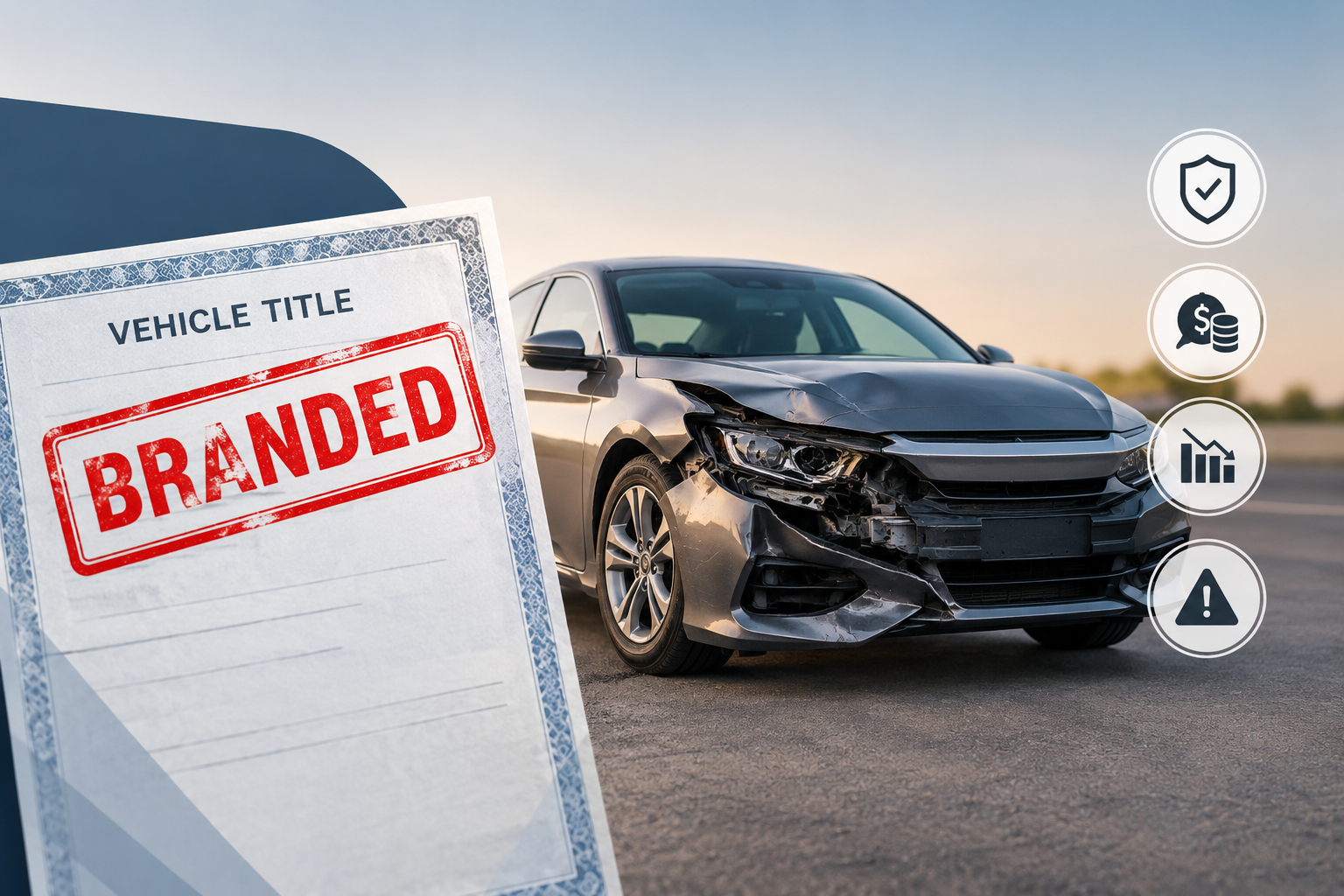
In short: A branded title marks a vehicle’s title with a designation showing it’s suffered significant damage, fraud, or another serious issue in its past. These cars sell for noticeably less than clean-title vehicles, but that discount comes with real tradeoffs in insurance, financing, resale value, and potential safety concerns.
What Is a Branded Title?
A branded title is a designation added to a vehicle’s title to flag that it’s experienced damage or another serious issue affecting its history. States assign these brands to give buyers a clearer picture of what a car has actually been through before it reaches a dealer lot or private sale.
Several distinct types of brands exist, each pointing to a different kind of problem. A lemon law brand appears when a manufacturer buys back or replaces a car due to unresolved defects, while an odometer tampering brand flags a vehicle whose mileage has been fraudulently rolled back.
A salvage brand means an insurer declared the car a total loss after an accident, while a rebuilt brand shows that a salvage vehicle was later repaired and passed a state safety inspection. A water damage brand warns that flooding affected the car’s interior or mechanical systems, often with problems that surface gradually over time.
Branded Title vs. Salvage Title
A salvage title is technically one specific type of branded title, but the terms get used interchangeably often enough to cause confusion. A branded title broadly indicates some history of damage or documented issues, while a salvage title specifically means an insurer determined that repair costs exceeded a set percentage of the car’s actual value.
Salvage titles tend to carry heavier consequences than other branded designations. Financing and insurance both become noticeably harder to secure, and resale value drops more sharply than it does with a rebuilt or lemon law brand, since salvage status signals the most serious tier of prior damage.
How to Check if a Car Has a Branded Title
Checking title status before buying is one of the most important steps in the entire used car process. The National Insurance Crime Bureau offers a free VINCheck tool that flags whether a vehicle has been reported as salvage or stolen, making it a reasonable first step before spending money on a more detailed report.
Paid vehicle history services add considerably more detail beyond that initial free check, including accident history, past ownership records, and service history tied to the VIN. Many states also let buyers check title status directly through their DMV’s website, which can confirm brand information a private seller might not disclose upfront.
Pros and Cons of Buying a Branded Title Car
Buying a car with a branded title may help you save real money, but the risks deserve serious consideration before committing. Weighing both sides carefully upfront prevents a tempting discount from turning into a costly regret.
Pros
- Lower upfront cost — Salvage title vehicles often sell for 20% to 40% less than an equivalent clean-title car.
- Access to higher-end features — A branded title can put leather interiors or premium trim packages within reach of a smaller budget.
- DIY-friendly savings — Anyone comfortable handling minor repairs themselves can turn sweat equity into real cost savings.
Cons
- Harder to insure — Insurance becomes more difficult to secure, particularly for cars with serious structural damage in their history.
- Permanent designation — The branded status stays on the title forever, even after a full repair and inspection.
- Lower resale value — Future buyers see the same branded history, which keeps resale prices lower long-term.
- Limited financing options — Lenders view branded title vehicles as a bigger risk tied to the loan’s full term, so approval can be harder to get.
A Real Cost Savings Example
Concrete numbers make the tradeoff easier to evaluate than percentages alone. A clean-title sedan valued at $20,000 might sell with a salvage title for roughly $12,000 to $16,000, reflecting that same 20% to 40% discount range.
That $4,000 to $8,000 in upfront savings needs to be weighed against realistic added costs down the line. Higher insurance premiums, a larger required down payment for financing, and the eventual resale discount can quietly erode much of that initial savings over a few years of ownership.
Physical Red Flags to Check Before Buying
Beyond the paperwork, a careful in-person inspection catches issues a title report alone might miss. A musty or heavily masked air-freshener smell inside the cabin is a classic sign of past flood damage, especially when paired with damp carpeting or fogged-up gauge clusters.
Checking under the carpet and seats for rust or water staining reveals damage a quick visual walkaround would miss entirely. Mismatched paint panels, uneven gaps between body parts, and corrosion on bolts that should otherwise look factory-fresh are all signs of prior accident repair that a seller may not mention voluntarily.
How to Insure a Car With a Branded Title
Insuring a branded title vehicle takes a bit more legwork than insuring a clean-title car. Many insurers hesitate to offer full comprehensive and collision coverage on rebuilt or salvage vehicles, since it’s genuinely difficult to separate new damage from damage tied to the car’s prior history.
Salvage title cars generally need to pass a state safety inspection first, which converts the title to rebuilt status and makes the car legal to drive and easier to insure. Insurers will typically also want a certified mechanic’s statement, current photos, and the original repair estimate before extending coverage.
Title Washing: A Fraud Risk Worth Understanding
Title washing happens when a dishonest seller moves a branded vehicle to a state with weaker title-disclosure laws, effectively erasing or hiding its history on paper. Because title brand rules vary significantly between states, a car genuinely flagged as salvage in one state can sometimes re-register as clean in another with looser requirements.
This is exactly why relying on a VIN-based history check matters more than trusting the physical title document alone. A VIN check pulls history across state lines, making it much harder for a washed title to hide a genuinely branded past from a careful buyer.
Should You Buy a Branded Title Car?
A branded title car can make sense if the savings are substantial and you’re comfortable with some uncertainty, or if you specifically enjoy working on vehicles yourself. It can also open the door to features or trim levels that would otherwise sit outside your budget entirely.
On the other hand, if reliable financing, easy resale, and full insurance coverage matter most to you, the risks may outweigh the discount. Comparing prices on marketplace listings, checking Kelley Blue Book or Edmunds values, and timing a purchase near the end of a sales month are all reasonable ways to find savings on a clean-title car instead.
Frequently Asked Questions
Is It Bad to Buy a Car With a Branded Title?
It’s not automatically bad, but it does carry real risks around insurance, financing, and resale value. Buyers comfortable with those tradeoffs, especially for a significant price discount, can still make a reasonable decision.
Can You Remove a Branded Title?
No, a legitimate branded title designation is permanent and stays with the vehicle even after repairs. The only way brands disappear is through fraudulent title washing, which is illegal and leaves buyers unknowingly exposed to a hidden history.
Does a Branded Title Affect Car Insurance Rates?
Yes, branded title vehicles often come with higher premiums and more limited coverage options. Some insurers only offer liability coverage rather than full comprehensive and collision protection.
How Much Cheaper Is a Branded Title Car?
Salvage title vehicles typically sell for 20% to 40% less than an equivalent clean-title car. The exact discount depends on the type of brand, the extent of prior damage, and current market conditions.
Is a Rebuilt Title Better Than a Salvage Title?
Yes, a rebuilt title generally indicates the vehicle was repaired and passed a state safety inspection after previously holding salvage status. It typically carries less risk than an unrepaired salvage title, though resale value and insurance options remain more limited than a clean title.
Final Thoughts
A branded title isn’t automatically a dealbreaker, but it does demand more homework than a typical used car purchase. Running a VIN check, inspecting the car carefully in person, and confirming realistic insurance and financing options upfront all help separate a genuinely good deal from a costly mistake. Weighing the real savings against the full picture of long-term costs is the only way to know whether a specific branded title car is actually worth it for your situation.
Vehicle history, title laws, and insurance requirements vary by state and change periodically, so details here may not reflect current rules in your area. Checking with your state’s DMV and a trusted mechanic before purchasing is always the safest approach.
